





Sleep Debt Explained: Can You Really Catch Up on Lost Sleep?
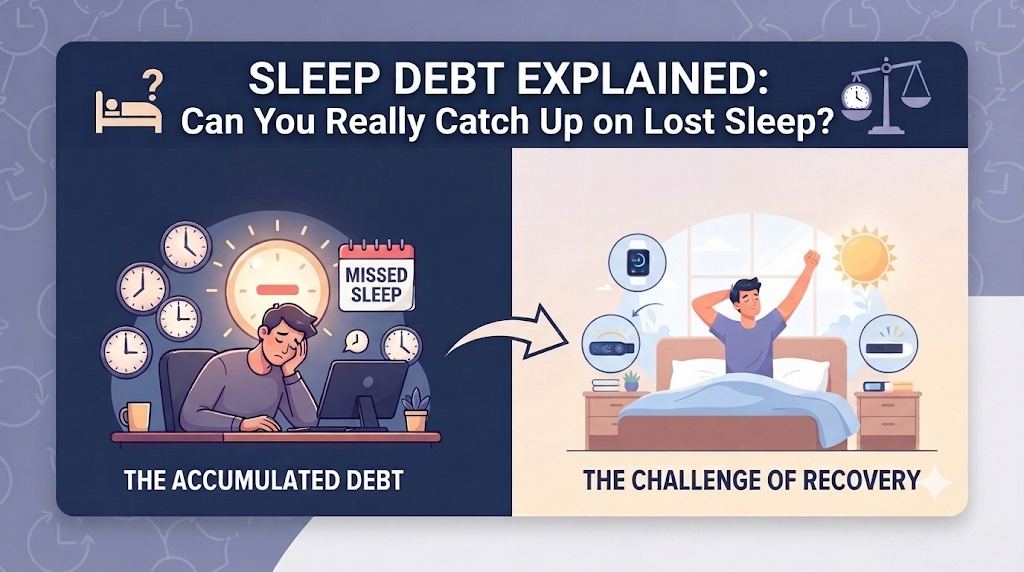
It’s late at night, you have an early meeting tomorrow, but you’re still watching your favourite Netflix show well past midnight. You pull late nights often, promising yourself that you will catch up on sleep over the weekend.
Sound familiar? Then this one’s for you!
Between work deadlines, family responsibilities, social commitments, and endless scrolling, sleep is often the first thing we sacrifice. At first, missing an hour or two here and there might not seem like a big deal. But when late nights become a habit and those hours keep adding up, things change.
That is where sleep debt comes in.
But the real question is: Can you really repay all those lost hours of sleep by sleeping in on your day off or over the weekend? Or is your body actually keeping track of every late night?
Let’s explore what sleep debt is, how it affects your body and mind, and whether you can really repay it.
What Is Sleep Debt?
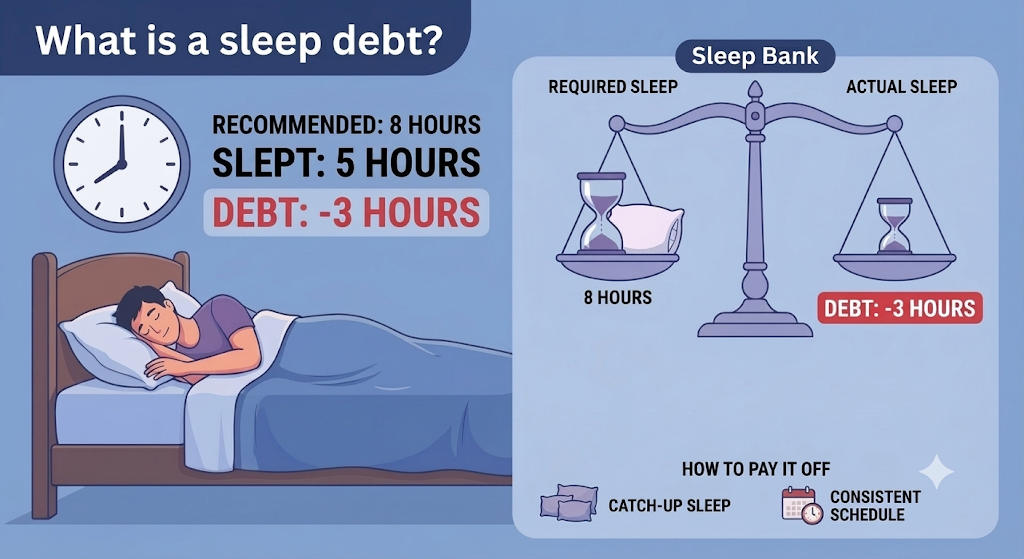
Sleep debt (or sleep deficit) is the gap between how much sleep your body needs and how much it gets. It develops when you consistently get less sleep than your body requires.
Think of it as an unpaid balance. Every night you miss out on adequate sleep, the deficit grows.
For example, you need 8 hours of sleep every night, but you only get 6 hours. That’s a 2-hour sleep deficit in one night. If this happens for five nights in a week, you accumulate approximately 10 hours of sleep debt by the end of the week.
Sounds like a lot, doesn’t it?
However, recovering from sleep debt or catching up on lost sleep isn’t as straightforward as it seems. Your body doesn’t necessarily need you to replace every lost hour with an
additional hour of sleep. Sleep recovery is more complicated than that, and the effects of repeated sleep deprivation can take longer to improve than one good night’s rest.
Types of Sleep Debt

Acute Sleep Debt
This develops after a short period of insufficient sleep, such as sleeping late for several nights or working through a demanding week.
Chronic Sleep Debt
This develops when you regularly get less sleep than your body needs over an extended period.
While an occasional late night is normal, consistently missing adequate sleep can become a bigger concern.
Common signs of sleep deficit include:
- Constantly craving caffeine just to feel normal
- Brain fog, forgetfulness, trouble focusing
- Irritability or mood swings
- Falling asleep within minutes of lying down
- Feeling exhausted or lacking energy throughout the day
- Sleeping much longer on days off
What Happens When You Don’t Get Enough Sleep?
Sleep isn’t simply downtime. It’s a period when your brain consolidates memories and clears waste, and your body regulates hormones, appetite, and immune function.
When you regularly get less sleep than your body needs to rest and recover, several aspects of your daily life could get affected,
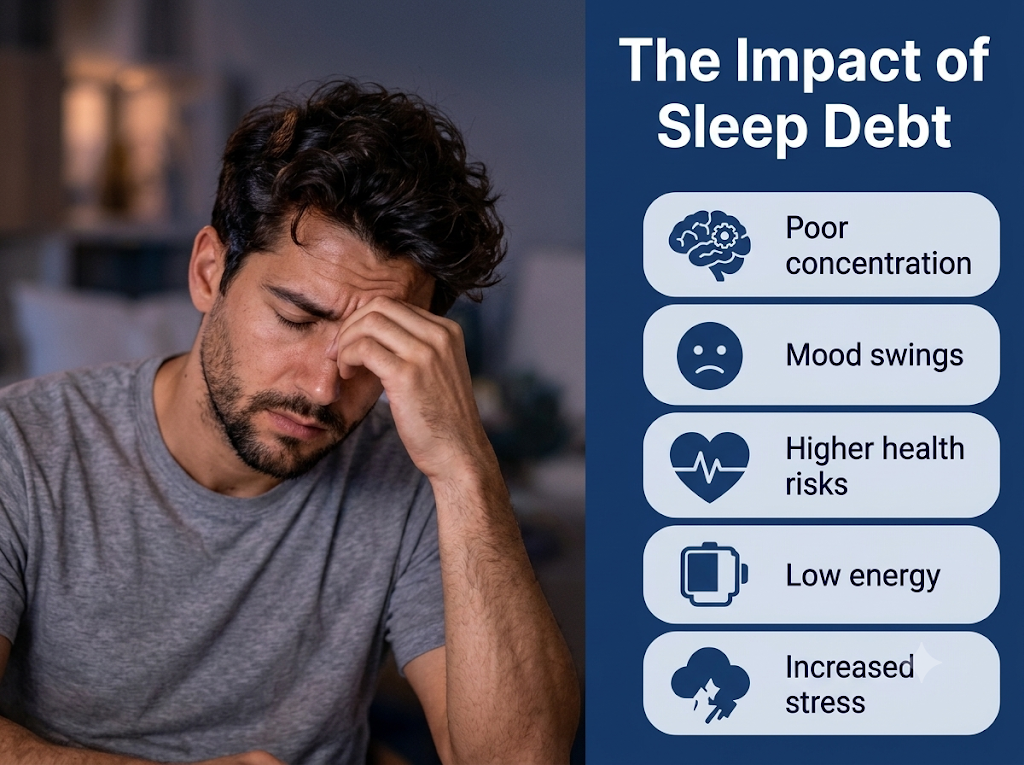
These include:
1. Difficulty Concentrating
Insufficient sleep can make it more difficult to concentrate, process information, and remember things. It is also linked to slower reaction time, which can make everyday tasks more challenging.
2. Mood Swings
Lack of sleep could also affect how you respond to everyday situations. When you get too little sleep, you might feel irritated, impatient, stressed, or emotionally sensitive to small inconveniences.
3. Compromised Physical Health
Sleep helps your body recover and plays a crucial role in several processes that keep it functioning properly. Insufficient sleep in the long run is associated with a higher risk of health problems, such as high blood pressure, obesity, type 2 diabetes, and cardiovascular disease.
4. Low Energy Levels
Persistent tiredness and low energy are the biggest giveaways of long-term inadequate sleep. Feeling tired after waking up, struggling to stay alert in the afternoon, or relying heavily on caffeine to get through the day can signal a sleep deficit.
5. High Stress Levels
Poor sleep for a very long period of time can also affect your mental health and is linked to high stress and anxiety, and a greater risk of depression over time.
Can You Really Catch Up on Lost Sleep?
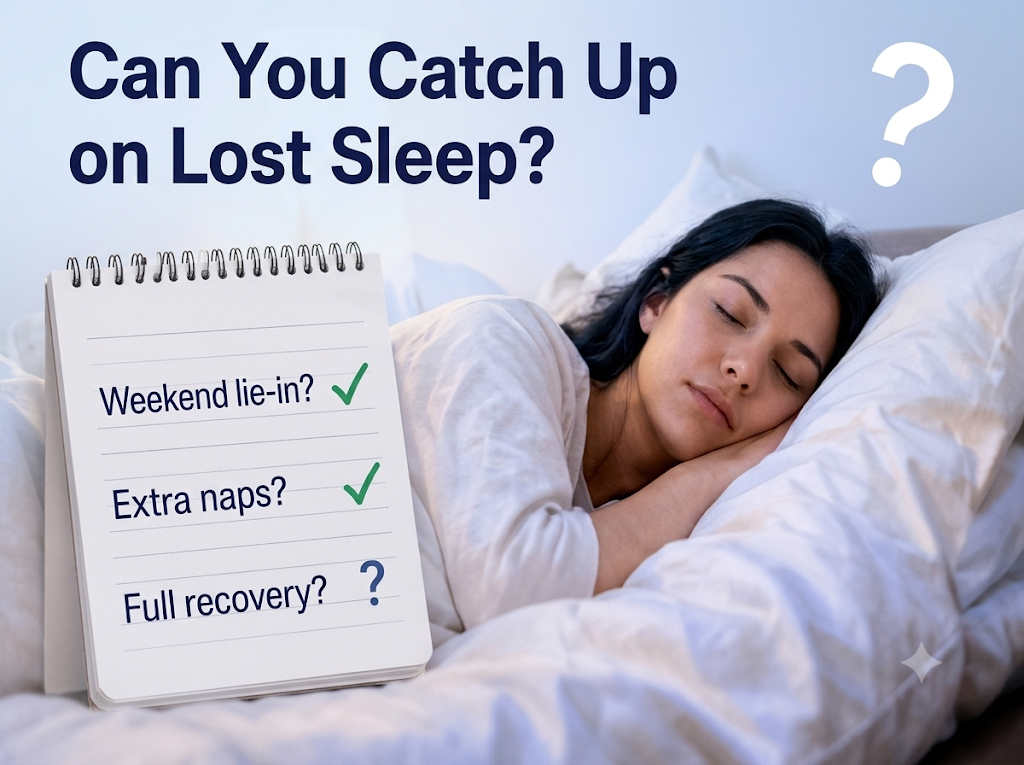
Unfortunately, the answer is neither a definite yes nor a definite no.
Getting extra sleep after a short stretch of poor sleep can actually help you recover from some of the effects of short-term sleep loss, such as improved alertness and mood. However, research suggests weekend catch-up cannot reliably or fully reverse the consequences of long-term sleep deprivation.
Some studies also suggest that metabolic and focus issues could linger for a long time.
The key point is that feeling less tired and completely recovering from long-term sleep loss aren’t always the same.
A 2025 review noted that weekend catch-up sleep may provide short-term benefits but should not be treated as a long-term solution to chronic sleep deprivation.
The takeaway is that catch-up sleep isn’t necessarily bad, but relying on weekends to fix an unhealthy sleep schedule isn’t a sustainable long-term solution.
How to Recover From Sleep Debt: Practical Tips

If you are running on too little sleep, here are practical tips to help you recover and build a healthier routine without making dramatic lifestyle changes.
1. Add 30-60 Minutes a Night
Most adults need at least seven hours of sleep every night. If you go to bed late every night, start by gradually adding 30-60 minutes to your sleep schedule.
2. Keep Wake-Up Times Consistent
Maintain a consistent sleep schedule by going to bed and waking up around the same time every day. Even on weekends, stay within an hour of your usual time.
A regular sleep schedule supports your body’s internal clock and makes it easier to establish a predictable sleep routine.
3. Take a Short Nap
A small nap during the day can help improve alertness and reduce tiredness after a prior night’s sleep. Aim for a 20-30 minute nap in the early afternoon.
4. Create a Relaxing Bedtime Routine
If you can’t sleep well, you may need to adjust your sleep habits and bedtime routine.
Consider making a few simple changes:
- Reduce screen time before bedtime
- Avoid heavy meals close to bedtime
- Keep your bedroom quiet, dark, and comfortably cool
- Limit caffeine in the afternoon and evening, as it can linger in your system for hours
- Try relaxing activities before bed, such as reading, listening to calm music, or light stretching
5. Give Your Body Time to Recover
If you have been sleep-deprived for a very long time, one good night’s sleep over the weekend can’t fix everything. Allow your body time to recover gradually and establish a consistent sleep routine.
However, if you persistently feel excessively tired, consider speaking with a healthcare professional. Sometimes, persistent tiredness can be associated with sleep disorders and underlying health conditions.
How Much Sleep Do You Actually Need?

The amount of sleep each person needs varies. It can depend on factors such as age, lifestyle, and individual circumstances.
Here is the CDC’s age-specific sleep guidance:
| Age group | Recommended sleep per day |
| Newborns (0-3 months) | 14-17 hours |
| Infants (4-12 months) | 12-16 hours (including naps) |
| Toddlers (1-2 years) | 11-14 hours (including naps) |
| Preschoolers (3-5 years) | 10-13 hours (including naps) |
| School-age children (6-12 years) | 9-12 hours |
| Teenagers (13-17 years) | 8-10 hours |
| Adults (18-60 years) | 7 or more hours |
| Adults (61-64 years) | 7-9 hours |
| Older adults (65+) | 7-8 hours |
These are general recommendations, and individual sleep needs can vary. Sleep quality and consistency also matter.
Frequently Asked Questions
How long does it take to recover from sleep debt?
There isn’t a fixed time to pay off the sleep debt. Recovery depends on how much sleep you have missed and for how long. Extra sleep on weekends or your days off can help reduce the effects of short-term sleep loss, but the effects of chronic sleep deprivation may linger for longer.
Is sleeping 12 hours on the weekend a good idea?
Occasionally sleeping longer on weekends is okay and can help you recover from a few nights of insufficient sleep. However, regularly missing out on adequate sleep and trying to compensate on weekends isn’t a good idea. Maintaining a consistent sleep schedule is a better long-term approach.
Can naps help reduce sleep debt?
Naps can temporarily improve alertness, mood, and concentration, but they can’t replace a good night’s sleep.
Final Thoughts
Missing a few hours of sleep occasionally isn’t harmful. Sleep debt accumulates gradually when you persistently get less sleep than the amount of sleep your body needs every single night.
While sleeping extra on weekends and taking occasional naps can help reduce short-term effects of sleep loss, they aren’t a reliable substitute for consistent, good-quality sleep.
The best way to manage sleep debt is to avoid accumulating it in the first place. If work or a busy schedule has already caused the damage, gradually extending your sleep time, maintaining a regular sleep schedule, and making a few practical changes to your bedtime routine can help you get back on track.