






Why Doing Nothing Feels So Difficult in a World That Never Stops

When was the last time you sat quietly for 10 minutes without reaching for your phone, checking emails, or thinking about your next task? No messages, no chores, no plans—just a moment of peace.
For many of us, the answer isn’t easy to find. Even when we make time to relax, our minds keep racing. Sitting still can feel uncomfortable, and doing nothing can trigger an unexpected sense of guilt.
But have you ever wondered why doing nothing feels so difficult?
Because society has glorified busyness and treats it as a badge of honour. Over time, modern life has conditioned us to view quiet moments as wasted time, making us feel guilty when we slow down.
Let’s explore why rest feels so difficult when it is a natural part of life, and how we can learn to enjoy it without feeling guilty.
Common Reasons We Feel Guilty About Doing Nothing

Many factors, such as productivity pressure, digital distractions, and overthinking, contribute to the discomfort of slowing down. We also often tie our self-worth to how much we have accomplished, while living in a society that celebrates busyness and discourages downtime.
As a result, taking a break can feel like falling behind, leading to feelings of anxiety and guilt.
Here are some common reasons that contribute to the discomfort and guilt associated with doing nothing.
1. Constant Productivity and the Pressure to Achieve

Long working hours, packed schedules, and endless to-do lists are often treated as signs of ambition and success. This makes productivity a part of our identity and self-worth.
After work, we turn to household responsibilities, personal projects, health, or self-improvement goals. Our schedules are so packed that even leisure time or self-care activities feel like a task.
Tip:
Ambition isn’t a problem, but not every moment needs to serve a purpose. When we make productivity a primary measure of a worthwhile day, rest or slowing down starts to feel like failure rather than a natural part of life. A meaningful life also needs room for experiences that produce no measurable results.
2. Digital Distractions and the Need for Stimulation

Before the digital revolution, people often had more opportunities to pause or sit in silence between tasks without reaching for a device. Today, smartphones have turned these quiet moments into time for mindless scrolling and social comparison.
By offering an endless stream of entertainment, information, and communication, smartphones have made it easy to fill every spare moment with digital stimulation. We instinctively reach for our phones whenever we have a moment, leaving no room for quiet reflection. Although scrolling can feel relaxing, it doesn’t provide the mental rest we need.
Over time, relying on constant digital stimulation can make stillness feel unfamiliar. As we become accustomed to having something to watch, read, or respond to, spending even a few minutes without distractions can feel uncomfortable.
Tip:
To stop filling every moment with screen time, try drinking your morning tea or coffee without scrolling, or take a short walk without your phone. These small moments can help you become more comfortable being present without needing constant stimulation.
3. Unfinished Tasks and Guilt
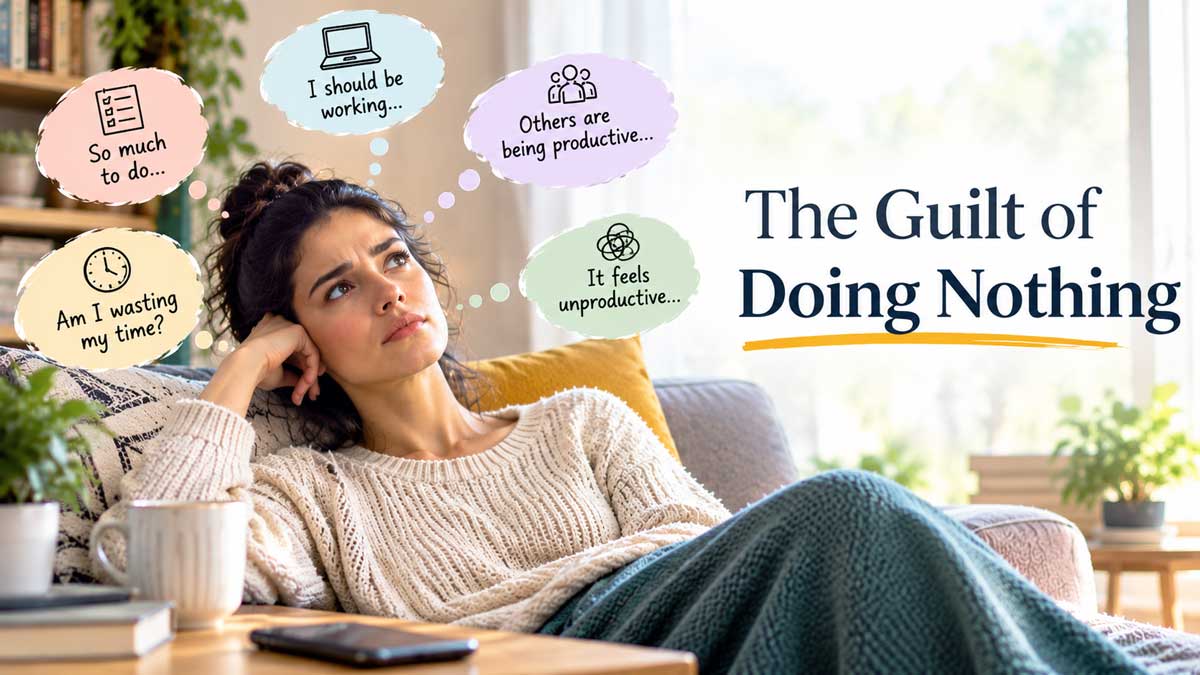
When the mind gets quiet time, thoughts become harder to ignore. Pending tasks, unanswered messages, and unfinished decisions resurface, making us feel uneasy.
When things go quiet, our minds have room to process thoughts we may have pushed aside throughout the day. The guilt also stems from the belief that our worth depends on how much we have accomplished. Eventually, we start believing rest must be earned only after we’ve taken care of every responsibility.
But chores and responsibilities never end. If relaxation depends on finishing your entire to-do list, it may never happen.
Tip:
Train your mind to understand that rest doesn’t have to be earned through exhaustion. You can take a break even when work remains unfinished. Your worth isn’t determined by how many tasks you have finished or how effectively you use every hour.
4. Overthinking and Wandering Thoughts

Staying busy keeps us from focusing on worries, unresolved feelings, or difficult decisions. But when we take a moment of peace and the noise around us fades, those thoughts and feelings become harder to ignore.
This makes doing nothing feel uncomfortable and sometimes stressful. However, keep in mind that you don’t need to force yourself into long periods of silence.
Tip:
Begin with a few peaceful minutes and notice your thoughts without feeling obligated to solve everything. If spending some time in silence consistently causes significant distress, consider seeking support from a qualified mental health professional.
5. The Belief That Rest Is Laziness

One common old misconception that society has fed us is that rest is a form of laziness. Rest gives us a chance to step away from everyday demands, whereas laziness involves avoiding responsibilities that need our attention.
Leisure activities such as reading books, listening to music, watching the rain, spending time in nature, or enjoying an afternoon without any plans don’t need to produce any measurable results.
Tip:
Not everything you do or every experience has to improve your skills, career, or productivity. Some moments are meant to be enjoyed without a specific purpose. The time you spend doing something you love, enjoying your own company, or simply doing nothing doesn’t need to serve a purpose.
Why Rest and Quiet Time Are Necessary
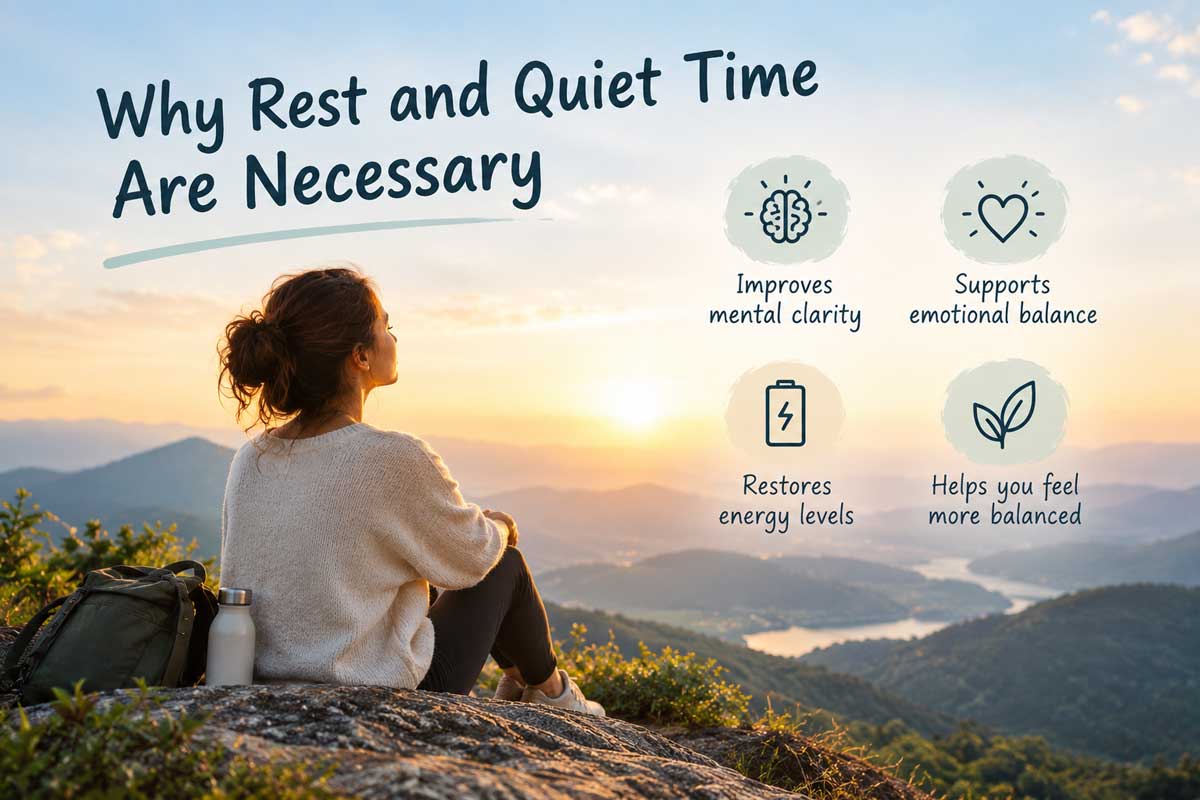
Rest may not solve every problem, but it should be part of a balanced routine, as it:
- Helps consolidate memories and process the day
- Gives the mind the space to wander and sparks creativity
- Helps lower stress by giving your nervous system a reset
- Helps prevent burnout before it forces you to stop
Some of the best ideas come when we are sitting, walking, staring out of the window, taking a bath, or doing nothing.
How to Relax Without Feeling Guilty
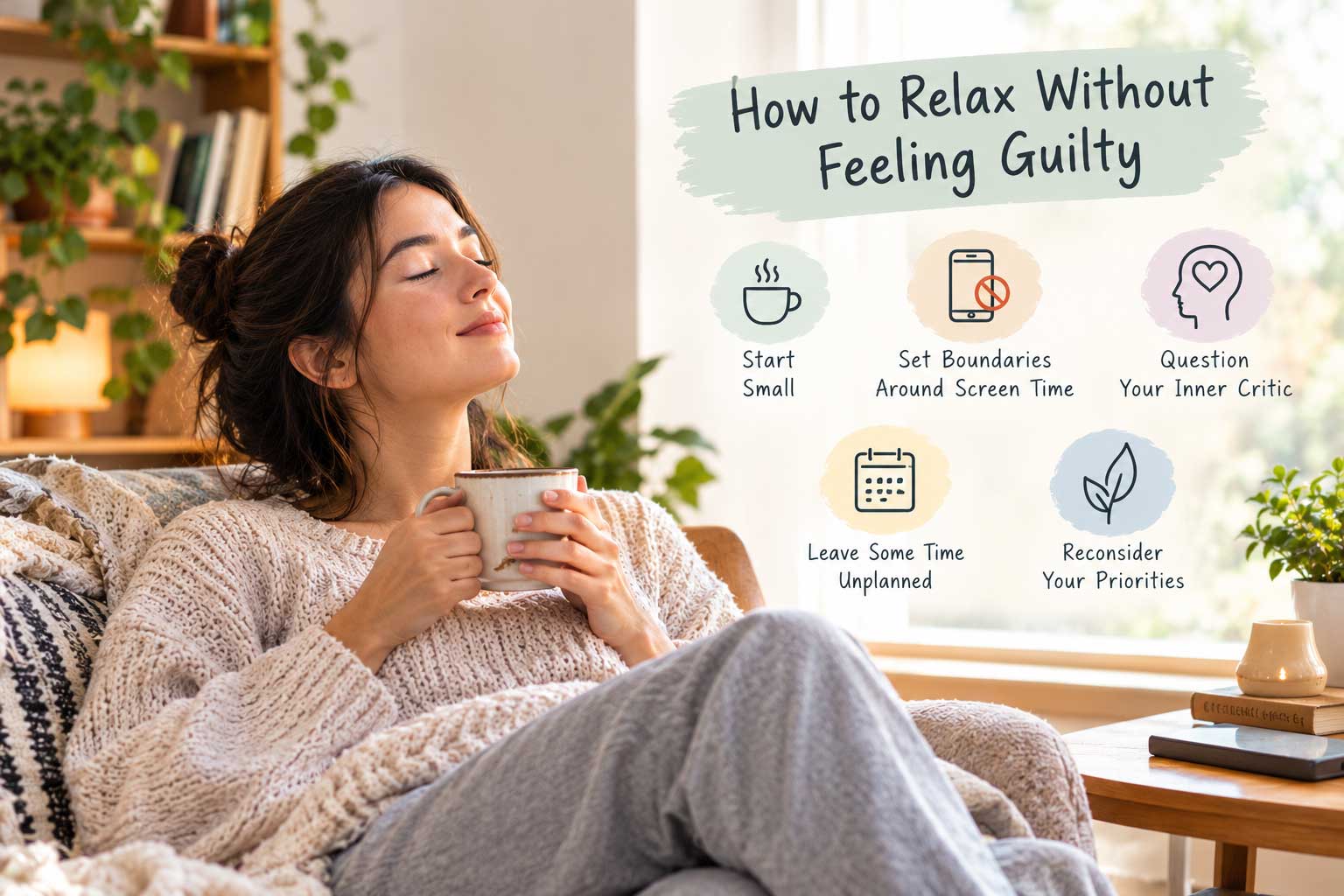
Sometimes doing nothing is exactly what you need. A few simple habits can help you enjoy quiet time without guilt.
Start Small
Set aside a few minutes to sit quietly, enjoy a drink, or look out the window. You don’t need to turn this time into a hobby. The goal is simply to sit back and relax for a while without worrying about tasks.
Set Boundaries Around Screen Time
Take short screen-free breaks, do a digital detox, or at least put phones away during meals. This gives you a chance to enjoy moments without constant stimulation.
Question Your Inner Critic
When you spend quiet time, if your mind keeps reminding you to be productive or do certain tasks, ask yourself whether the task is genuinely urgent or you are simply uncomfortable with being idle.
Leave Some Time Unplanned
Not every hour needs to be productive or purposeful. Leave some time unplanned in your busy schedule to take a peaceful walk, spend time in nature, or do something you enjoy.
Reconsider Your Priorities
Instead of judging your day by only the tasks you completed, ask yourself whether you made time for your needs, relationships, or well-being. A successful day doesn’t need to be perfectly productive, only meaningful.
Final Thoughts

In a world that constantly pushes us to do more, be more, and achieve more, slowing down is not something to be ashamed of but a necessity. At first, it might feel uncomfortable—you may worry about falling behind, wasting time, or not doing enough—but in the long run, it is essential for your mental well-being.
Whenever you feel like you’re drowning in everyday tasks, remind yourself that life is more than a checklist of tasks and achievements. It is made up of quiet mornings, unhurried conversations, peaceful afternoons, and moments with no purpose beyond being enjoyed.
Rest doesn’t mean abandoning your goals or responsibilities; it means making time for yourself. So the next time you have nothing to do, there is no need to feel guilty or try to fill every quiet moment. Let yourself pause without needing to justify it and enjoy doing something you love, resting, or spending some time for yourself.
You don’t have to earn the right to rest, and sometimes doing nothing is exactly what your mind and body need.