

With smartphones in hand and screens all around us, our exposure to digital technology has become difficult to control. Social media and other digital platforms create so much noise in our heads that, at some point, it starts impacting our emotions, mood, and overall temperament. Whether it is for news, work, communication, entertainment, or staying connected with loved ones, we often find ourselves glued to digital devices.
This has reached a point where we pay more attention to our smartphones than to the real world and people around us. Although technology has made life easier by connecting us to everything we need with just one click, the downside is excessive screen time and the overwhelming amount of information our minds are constantly processing.
A digital detox is the practice of taking a conscious break from smartphones and other digital devices to connect more to real life. It encourages healthier digital habits and using technology with greater awareness to improve mental clarity and restore balance. Enhance focus and support emotional well-being.
If you are wondering what a digital detox is and how to do a digital detox, you are in the right place. Here we will shed light on everything you need to know about digital detox.
Why Digital Detox Matters and What Are Its Benefits?
 Technology has truly taken over every area and aspect of our lives. No matter where we are or what we do, we rely heavily on digital technology. However, excessive use of technology can lead to digital overload and technology fatigue, which may result in reduced concentration, mood changes, and negative impacts on overall mental health.
Below are some of the key benefits of practising a digital detox.
Enhances Sleep Quality
 Scrolling through smartphones before going to sleep has become an everyday habit for many of us. This screen usage before bedtime can interfere with healthy sleep patterns and disrupt sleep quality.
The screens on our smartphones and tablets emit blue light, which can suppress the production of melatonin, the hormone responsible for regulating sleep. As a result, using phones before bed can make it harder to fall asleep and may also reduce sleep quality.
Practising digital detox before going to bed can help with:
- Falling asleep quickly
- Experiencing deeper sleep
- Reducing nighttime awakening
- Feeling more refreshed after waking up
Experts recommend limiting or completely avoiding phone use at least one hour before bedtime to support better sleep habits.
Improves Mental Health
 Excessive use of social media is linked to higher stress levels, feelings of loneliness, anxiety, and low self-esteem. Endless scrolling on social apps and information overload can throw us into a loop of comparison and emotional fatigue.
A digital detox gives the mind valuable time to slow down, reflect, and become more present in your own life. It allows you to focus on activities such as meditation, mindfulness, and connecting with nature, which can support positive mental health.
For better emotional well-being, take a break from constant exposure to:
- Negative news and information
- Online debates and arguments
- Comparison culture
- Unrealistic portrayals of lifestyles
Taking regular breaks from social media allows your mind to step away from constant digital stimulation, helping to reduce mental fatigue and promote emotional balance.
Boosts Concentration
 Continuous notifications, messages, and emails not only break concentration but also create interruptions in work, making it difficult to stay focused. Reducing digital distractions can improve productivity, enhance the ability to think deeply, and strengthen problem-solving capabilities.
A digital detox can help you with:
- Improving concentration
- Reducing procrastination
- Increasing work efficiency
- Completing tasks on time
Limiting screen time during work hours can increase productivity, improve efficiency, and help you achieve more meaningful accomplishments.
Reduces Stress and Anxiety
 Constant information overload and endless social media updates could create a sense of mental pressure and trigger anxiety. Constantly measuring yourself against others or trying to meet unrealistic standards and achievements could lead to stress, anxiety, and emotional exhaustion.
Taking a break from technology and focusing on relaxing activities such as walking, reading, writing, exercising, or spending time with loved ones can help reduce stress and anxiety.
Disconnecting from technology can help reduce:
- Information overload
- Excessive social media updates
- Decision fatigue
- Workplace stress
- Digital burnout
Even taking small breaks from digital devices from time to time can help you feel calmer and mentally refreshed.
Strengthens Personal Relationships
 Today, most people are glued to their screens even while spending time with friends or family. While technology has made it easier to stay connected digitally, it has also limited face-to-face interactions and meaningful conversations.
A digital detox encourages spending quality time with loved ones without digital interruptions, which can help improve personal relationships.
A digital detox strengthens relationships by encouraging:
- In-person conversations
- Active listening
- Meaningful conversations
- Shared activities
Spending quality time with family and friends without digital distractions can help you build stronger, happier, and healthier relationships.
Encourages Mindfulness
 Practising a digital detox helps us unplug from the digital world and become more present and aware of our real world. When we step away from constantly checking our devices for updates, we start paying closer attention to our surroundings, experiences, and emotions.
The purpose of mindful living is to focus on the present moment without judgment, which becomes easier when we reduce noise and distractions from the outside world.
Mindful living contributes to:
- Greater contentment
- Better emotional regulation
- Reduced anxiety
- Improved focus
A digital detox naturally supports mindfulness by allowing us to engage with daily life experiences fully and appreciate the present moment.
Support Better Physical Health
 Because multiple factors work together, excessive screen time also affects physical health in more ways than one. Sitting for extended periods, maintaining poor posture, and staring at the screen for long durations can manifest in physical symptoms such as back pain, neck pain, headaches, and digital eye strain.
During a digital detox, people are more likely to move throughout the day and engage in physical activities. Reduced screen time also gives your eyes some time to rest and helps prevent physical issues associated with prolonged device use.
A digital detox can reduce the risk of:
- Neck pain
- Eye strain
- Poor posture
- Heachaches
- Reduced physical activity
Reducing screen time supports overall physical health and energy levels by encouraging more movement and helping us stay active.
How to Know Whether You Need a Digital Detox
 You may benefit from a digital detox if you have been noticing the following signs:
- Compulsively checking your phone immediately after waking up
- Spending hours on endless scrolling without purpose
- Feeling anxious without your smartphone
- Experiencing frequent headaches
- Having poor sleep quality
- Finding it difficult to focus on tasks
- Reduced face-to-face interaction
- Feeling mentally exhausted after using social media
- Constant checking phone notifications
If you are experiencing several of these signs, then it’s your cue to establish healthier digital boundaries to protect and improve your physical and mental health.
Tips for a Successful Digital Detox
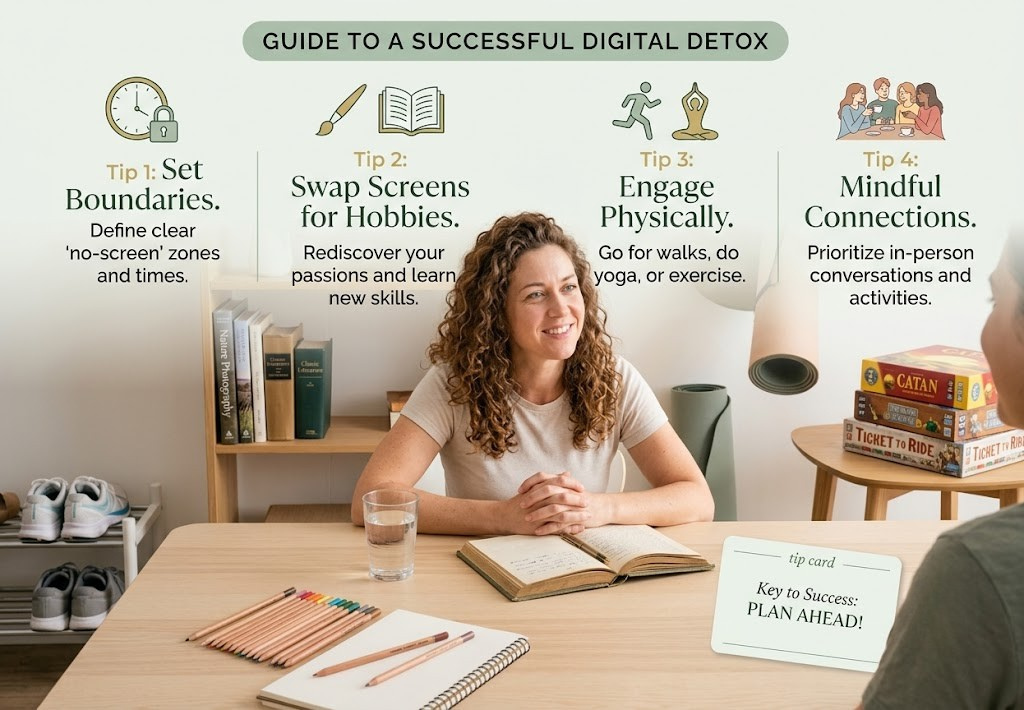 If you are planning to start disconnecting from technology and reconnecting more with life, here are some of the best digital detox tips to follow.
Remember, small steps go a long way; you dont have to take extreme measures. Even small changes to your routine can produce meaningful results.
1. Setting Screen Time Limits
Most advanced devices have built-in screen time tracking to monitor your daily device usage. Tracking your digital habits and reducing screen time by 30-60 minutes each day is a good starting point.
2. Creating Phone-Free Zones
You can designate certain areas in your home or office as device-free zones. For example, the dining table, family room, bedroom, or study area can be kept screen-free to encourage more meaningful interactions with loved ones.
3. Turning Off Non-Essential Notifications
By turning off notifications from non-essential apps on your phone, you can significantly reduce distractions and improve your ability to focus on your important tasks.
4. Doing Offline Activities
During your digital time-out, plan constructive activities such as gardening, reading books, walking, painting, journaling, or yoga instead of purposeless scrolling.
5. Avoiding Screens Before Bed
Experts recommend reducing screen use before bedtime to support more relaxing, higher-quality sleep. You can listen to music, meditate, or read books to relax your mind and enjoy better sleep for a refreshed start of the day.
6. Spending Time Outdoors
Nature can calm our senses and help us feel more relaxed. Enjoying outdoor activities such as walking, cycling, hiking, gardening, and picnics provides a healthier alternative to screen time.
Final Thoughts
Technology today has become an inseparable part of our lives, to the point that sometimes we lose touch with real life without even realising it. A digital detox is an incredible tool to unplug from technology and reconnect with real-life experiences.
The purpose of digital detox is not to reject modern life or eliminate technology, but to maintain a healthy balance between digital devices and everyday life. By setting clear intentions and deciding when to disconnect, you can easily take back control of your personal life and improve your physical, mental, and emotional well-being.