
Introduction
Automation not only entails improving efficiency but also building intelligent machines that would be capable of making independent decisions by the year 2026. That’s why the question of AI Agent vs AI Workflow is worth exploring.
There are lots of people and organizations wondering:
- Which one should I choose? Structured automation (AI workflow)?
- Autonomous entities that make independent decisions (AI agent)?
- Selecting the wrong strategy will result in a waste of effort and inefficiency.
In this article, we will explore:
- What is the difference between them
- Practical examples (and not theoretical concepts)
- Which situations to apply them to and which one to choose in 2026
What are AI Agents and Workflows?
 What are AI Workflows?
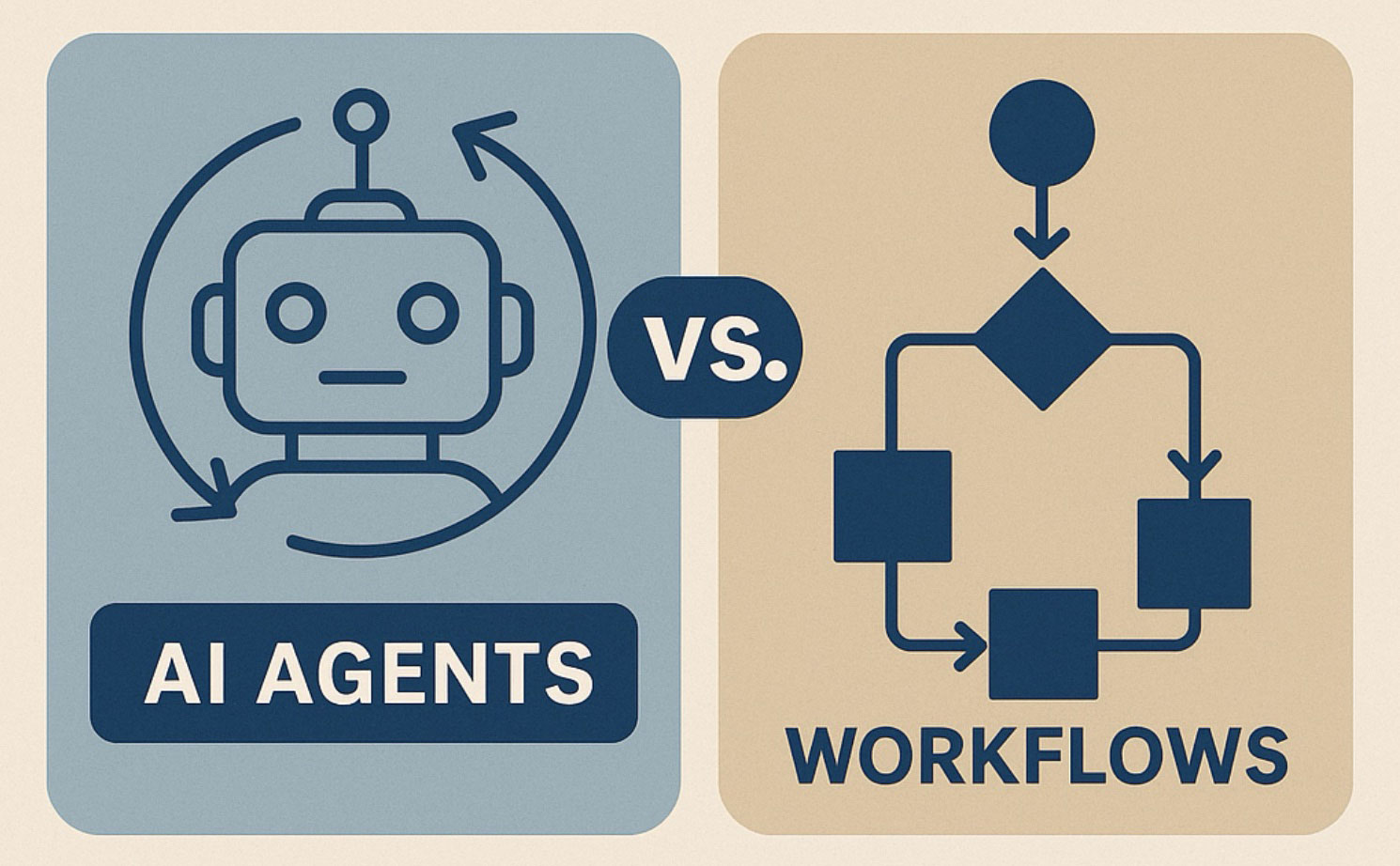
AI workflows are a sequence of actions designed to be executed according to a set procedure. They could be considered as: “If this happens → do that.”
Example: User fills form → AI sends email → Data stored in CRM
Key Traits:
- Rule-based
- Predictable
- Limited flexibility
What is an AI Agent?
AI agents are autonomous entities that can make decisions and act upon them. They are not just command executors, but rather entities that know how to achieve their objective efficiently.
Example:
AI agent handles customer support:
- Understands query
- Searches the knowledge base
- Responds
- Escalates if needed
Key Traits:
- Goal-oriented
- Adaptive
- Self-improving (in advanced setups)
AI Agents vs AI Workflows: Core Differences
| Feature | AI Workflows | AI Agents |
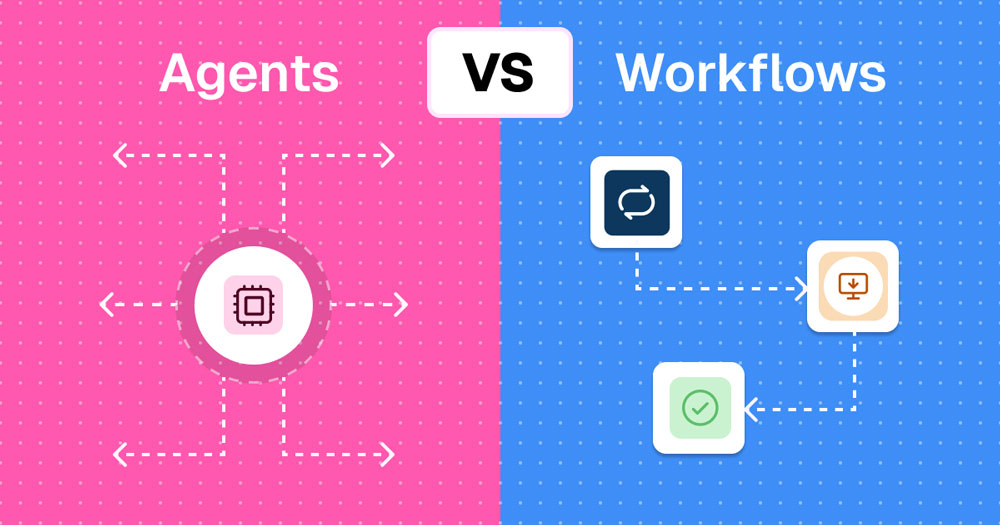
| Structure | Fixed steps | Dynamic decisions |
| Flexibility | Low | High |
| Intelligence | Rule-based | Context-aware |
| Use Case | Repetitive tasks | Complex problem-solving |
| Human Input | Required often | Minimal after setup |
| Scalability | Limited | High |
Key Takeaway:
- Workflows = Automation
- Agents = Intelligence + Automation
Knowing the basics of machine learning and deep learning also assists in comprehending the decision-making process followed by AI agents.
AI Agents vs Workflows Difference (Deep Breakdown)
1. Decision-Making
- Workflows: Follow the logic you define
- Agents: Decide based on context
2. Adaptability
- Workflows: Break when conditions change
- Agents: Adjust automatically
3. Complexity Handling
- Workflows: Best for simple tasks
- Agents: Handle multi-step, uncertain scenarios
AI Agents’ Benefits vs Workflows
Benefits of AI Workflows
- Easy to set up
- Predictable outcomes
- Cost-effective
- Great for beginners
Benefits of AI Agents
- Reduce human intervention
- Handle complex tasks
- Learn from interactions
- Improve efficiency over time
AI Workflows vs AI Agents Use Cases
When to Use AI Workflows: Use workflows if your task is:
- Repetitive
- Structured
- Predictable
Examples:
- Email automation
- Lead capture systems
- Invoice generation
- Social media scheduling
When to Use AI Agents
Use agents if your task involves:
- Decision-making
- Uncertainty
- Multiple steps
Examples:
- Customer support bots (advanced)
- AI research assistants
- Sales follow-up automation
- Personal productivity assistants
Real-World Examples
Example 1: E-commerce Business
Workflow Approach: Order placed → Email sent → Shipping triggered
Agent Approach: Detect customer behavior → Recommend products → Handle queries → Upsell
Result: Higher revenue with agents
Example 2: Content Creation
Workflow: Topic → AI writes → Publish
Agent: Research trends → Generate ideas → Write → Optimize SEO → Schedule
Agents reduce manual work drastically
Example 3: Customer Support
Workflow: FAQ-based chatbot
Agent:
- Understands intent
- Searches the knowledge base
- Responds dynamically
- Better customer experience
Mini Case Study
Problem: A small SaaS company struggled with handling customer queries manually.
Solution: They first used an AI workflow chatbot, but it failed when users asked unexpected questions.
Then they switched to an AI agent system. Results:
- 60% reduction in support workload
- 35% faster response time
- Higher customer satisfaction
Insight: Workflows failed due to rigidity. Agents succeeded due to adaptability.
Expert Insight, From practical implementation experience, here’s the truth:
Most people jump to AI agents too early. Why? Because:
- Agents require a better setup
- They can behave unpredictably if poorly designed
Recommendation:
- Start with workflows
- Move to agents when complexity increases
Golden Rule:
“If your process is predictable, use workflows.
If it requires thinking, use agents.”
How to Implement (Step-by-Step)
Step 1: Identify Your Task Type
Ask:
- Is it repetitive? → Workflow
- Is it dynamic? → Agent
Step 2: Start with a Workflow
Tools you can use:
- Zapier
- Make (Integromat)
- n8n
Create simple automation first.
Step 3: Add AI Layer
Examples:
- Email writing using AI
- Data classification
Step 4: Upgrade to AI Agent (If Needed)
Use:
- AutoGPT-style systems
- LangChain-based tools
- Custom AI agent frameworks
Step 5: Monitor & Improve
Track:
- Performance
- Errors
- Time saved
Which Is Better in 2026?
AI Agents are the future—but AI Workflows are still essential.
Detailed Answer:
| Scenario | Best Choice |
| Beginners | Workflows |
| Small tasks | Workflows |
| Complex automation | Agents |
| Scaling business | Agents |
Final Verdict:
- Start with workflows
- Scale with agents
Conclusion
The debate around AI Agents vs AI Workflows isn’t about choosing one—it’s about using both strategically.
- Workflows give you control
- Agents give you intelligence
If you’re just starting, build structured workflows.
As your needs grow, layer in AI agents to handle complexity. Actionable Takeaway: Audit one process today and decide:
- Can it be automated with a workflow?
- Or does it need an intelligent agent?
That single decision can transform your efficiency in 2026.
FAQs
1. Explain AI agents and workflows.
AI workflow follows specific rules, whereas an agent is defined as an entity capable of making decisions and adapting to its environment.
2. What is the major difference between AI agents and workflows?
The major difference is the ability to adapt to changes. Workflows are inflexible, but agents can adapt.
3. Which is better – agents or workflows?
Neither is better. Workflows are more efficient when performing basic functions, whereas agents perform complex functions more efficiently.
4. Can AI agents replace workflows?
No. They complement each other. Workflows handle structure, while agents handle intelligence.
5. Which should beginners use?
Beginners should start with AI workflows before moving to AI agents.